
Star Voyager
Navigate real space and meet alien lifeforms galaxies away.
1. Research focus
Star Voyager is an internal R&D product built to explore how simulation, narrative systems, and autonomous AI agents behave inside a single interactive world.
A core theme is the future of entertainment: worlds that respond, adapt, and develop alongside the player—an infinite game that plays with you.
2. System design
Persistent, shared universe
The galaxy runs continuously under a single server authority. Discoveries and world changes are permanent and visible to all captains.
- 120,000 star systems with realistic stellar distribution
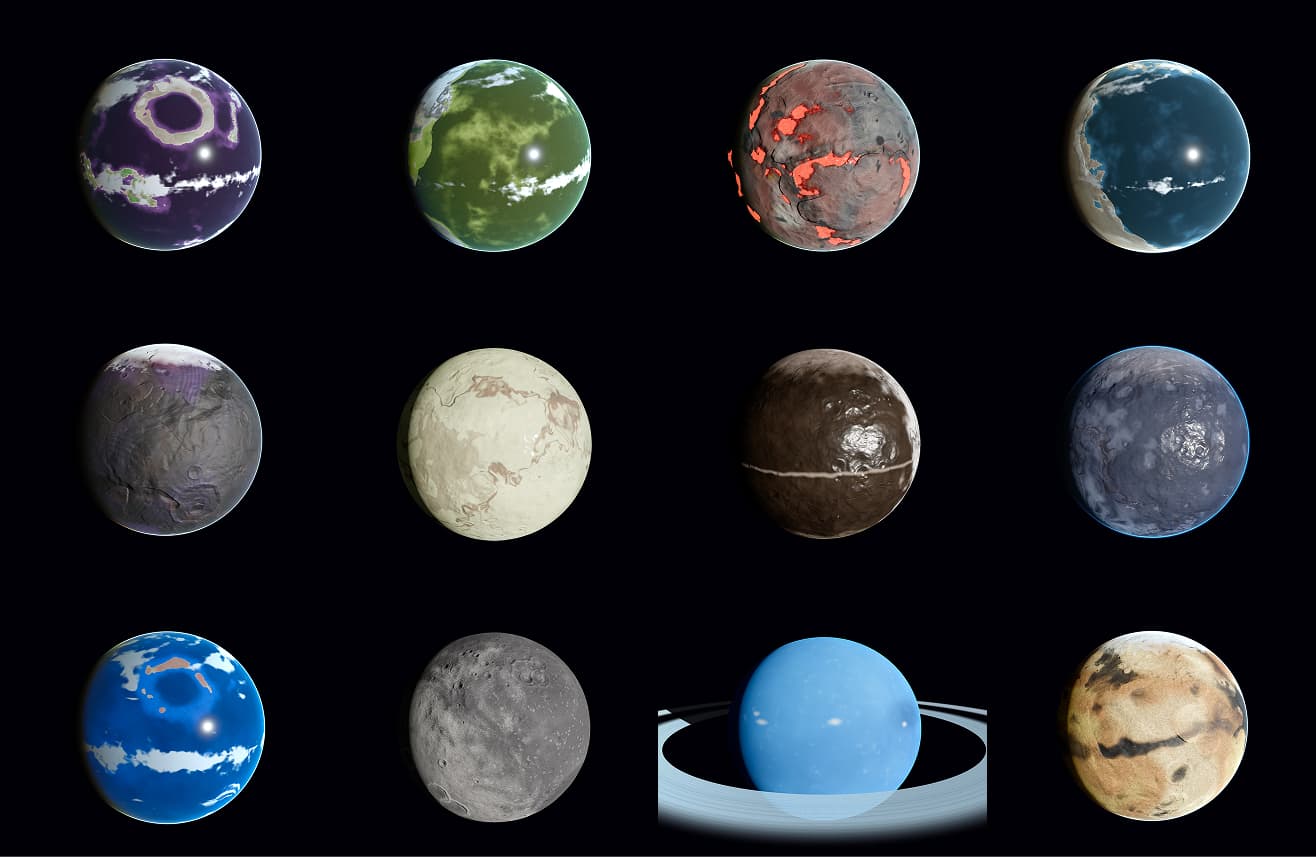
- ~2.5 million procedurally generated explorable worlds
- 28,000+ active AI civilizations at different technology levels
- 10 ship classes, from scouts to dreadnoughts
Living civilizations, not static content
Civilizations evolve over time. Cities expand, trade routes form, and conflict emerges from resource pressure, distance, and tech level. Advanced factions can build megastructures and Dyson swarms that are physically simulated based on material availability and technology.
Agent-driven interaction
Every civilization you encounter is an AI agent with its own goals, culture, and history. Agents maintain memory, adapt their behavior, and develop personality through repeated interactions. Trading, diplomacy, and conflict emerge from goals and constraints rather than scripted missions.
3. What we measure
Star Voyager functions as a safe sandbox for studying human–AI and agent–agent dynamics in a complex environment.
- How humans build trust with autonomous agents over time
- How memory and goals change negotiation, cooperation, and conflict
- Multi-agent behavior: coordination, alliances, escalation, and social ripple effects
- Stability of long-running simulations: consistency, drift, and unintended edge cases
- Emergent narrative quality: whether stories feel coherent without fixed scripts
4. What it enables
Entertainment
- Exploration where discovery changes a shared world
- Long-term relationships with factions shaped by interaction history
- Systems-driven stories that evolve without predefined arcs
Beyond gaming
- Simulation-based learning for systems thinking and experimentation
- Training environments for complex decisions under uncertainty
- Human–AI interaction research with real user behavior in a controlled setting
- Emergent narrative tooling that adapts to user context and actions
- Prototyping complex models inside a playable simulation before real-world rollout
5. Tech stack
- Frontend: [nextdotjs] Next.js
- 3D: [react] React Three Fiber and [threedotjs] Three.js with custom game graphic engines (planet gen, star gen, ship NPC autopilot)